 Steel
Key facts
- Reinwent sources five coil types: pickled and oiled hot rolled, cold rolled, galvanized, prepainted (PPGI) and Aluzinc coil.
- Strip mass per metre in kg = thickness (mm) × width (mm) × 7.85 ÷ 1000; coil weight divided by that gives the strip length.
- Full-width coil starts at 600 mm (23.62 in) wide and slit coil at 20 mm (0.787 in) wide on our product pages; thickness is ordered in millimetres.
- In EN 10346 the Z or AZ figure is the nominal coating mass of both surfaces together, in g/m².
- Reinwent is a trading and sourcing company that sources coil from verified Turkish mills, with one contact and a quotation within 12 hours at the latest.
Which types of steel coil are there, and how do they differ?
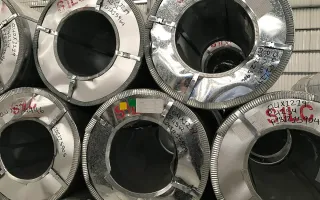
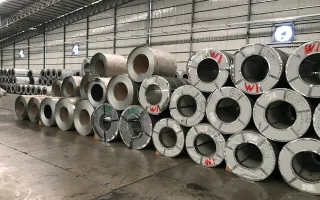
Five types are on our steel coil range. They form a chain. Pickled and oiled hot rolled coil is hot rolled strip with the scale removed and a protective oil film. Cold rolled coil is rolled further from it, so it is thinner, smoother and held to tighter tolerances. Galvanized coil has a hot-dip zinc coating, Aluzinc coil a hot-dip aluminium-zinc coating, and prepainted coil carries a coil-coated paint system on a zinc-coated base.
| Coil type | Surface | Standards on the product page |
|---|---|---|
| Pickled and oiled hot rolled | Descaled, oiled | EN 10111, EN 10025-2, EN 10149-2 |
| Cold rolled | Smooth, uncoated | EN 10130 |
| Galvanized | Zinc coating (Z) | EN 10346, ASTM A653/A653M |
| Aluzinc | Aluminium-zinc coating (AZ) | EN 10346, ASTM A792 |
| Prepainted (PPGI) | Paint system on zinc | EN 10169, EN 10346 |
How do hot rolled and cold rolled coil differ?
Hot rolling takes place above the recrystallization temperature of the steel and cold rolling below it. Hot rolled strip leaves the mill with an oxide scale, which pickling removes. Cold rolled strip is made from pickled hot rolled coil and is thinner, smoother and held to tighter tolerances. Annealing and temper rolling make it formable, while Full Hard coil is left unannealed. The full comparison is in hot rolled vs cold rolled coil, and the process after rolling in cold rolled coil annealing and surface quality.
What is the difference between galvanized and Aluzinc coil?
Galvanized coil is coated with zinc (code Z) and Aluzinc coil with an aluminium-zinc alloy of nominally 55% aluminium (code AZ). Both are continuous hot-dip coatings in EN 10346. Zinc protects as a barrier and by corroding first. Aluzinc is chosen for heat resistance and long-life roofing and cladding, and galvanized coil for severe forming and zinc-based protection. See galvanized vs Aluzinc coil and the guide on the trade names Galvalume, Zincalume and Aluzinc coil. For the surface of galvanized coil see spangle and surface finish.
What does a coating designation such as DX51D+Z275 mean?
DX51D is the steel grade name in EN 10346, and +Z275 is the coating: zinc, with a nominal total coating mass of 275 g/m² on both surfaces together, not one side. A grade name belongs to a standard, so the order names both. The grade families are explained in steel coil grades DX51D, DD11 and DC01, and the standards behind them in steel coil standards: EN 10111, 10130, 10346.
How do I estimate the weight of a coil?
The mass of a strip of 1 mm (0.039 in) thickness and 1000 mm (39.37 in) width is 7.85 kg per metre, taking steel at 7850 kg/m³. For other sizes, multiply thickness in mm by width in mm by 7.85 and divide by 1000. Coil weight divided by that figure gives the strip length. The result is theoretical, because tolerance, coating, oil and packing change the real weight, and the packing list gives the final figure. Use the steel coil weight calculator to do the arithmetic and to estimate the outer diameter.
Which thickness and width can I order?
Across the five types, thickness runs from 0.20 to 5.00 mm (0.008 to 0.197 in) and full-width coil from 600 to 1650 mm (23.62 to 64.96 in) wide, but each type has its own limits: hot rolled starts at 0.80 mm (0.031 in), and Aluzinc is limited to 2.00 mm (0.079 in) thick and 1250 mm (49.21 in) wide. The nominal thickness of coated coil includes the coating, and the standards allow normal or special tolerances. Coil thickness and width selection sets out the scopes and tolerances as the standards state them.
Should I buy slit coil or full-width coil?
A full-width coil, also called a master or mother coil, is strip at the width it was rolled or coated to. A slit coil is cut lengthwise from it into narrower coils on a line made of an uncoiler, a slitter and a recoiler. Slit coil has the same thickness and grade as the master coil but a cut edge, so burr, edge condition and camber should be specified. Our pages list slit coil from 20 mm (0.787 in) wide. For when to buy which, read slit coil vs full-width coil.
What is prepainted coil, and which paint systems are there?
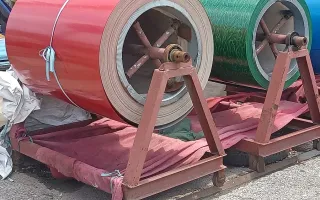
Prepainted coil (PPGI) is zinc-coated strip with a paint system applied in a coil-coating line, so the paint is already on the steel when it is formed. The product page lists polyester, high-durability polyester, PVDF, polyurethane-polyamide, PVC plastisol and polyurethane. For the standard and the colour references used with it, see prepainted coil paints and RAL colours.
How is steel coil packed and loaded into a container?
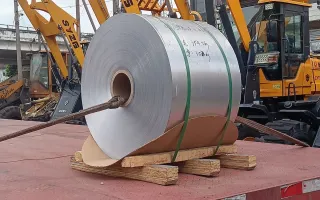
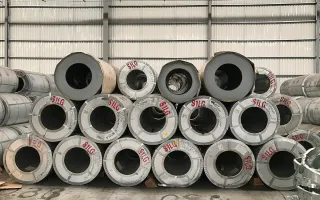
Coils are wrapped and strapped, then loaded eye to sky (axis vertical) or eye to the side (axis horizontal) on supports, never directly on the container floor, and lashed. The weight of one coil must fit within the container payload, so the heaviest coils may need break-bulk shipping. Packing and loading are agreed per order. The full detail is in steel coil packing and container loading.
What should a coil request contain?
State the coil type, one named standard and the grade designation, nominal thickness and width in millimetres, the coating designation if the coil is coated, full-width or slit, inner diameter and maximum coil weight, packing, quantity, destination and delivery term. With those fields filled in, offers can be compared line by line. The checklist is in the steel coil importers guide, and the technical drivers behind differences between offers in steel coil price factors.
How does Reinwent work?
Reinwent is a trading and sourcing company, and coil is sourced from verified Turkish mills. You send one specification through the request a quote form. We ask mills to quote against it, set the offers out on the same basis and follow the order through packing, loading and shipping, with one contact for the whole process. The quotation comes within 12 hours at the latest. The steps are on the how we work page, and what an intermediary does is explained in what a steel trading company does.
Which HS code does steel coil use?
Flat-rolled steel coil is classified in Chapter 72 of the Harmonized System. For non-alloy steel the width limit is 600 mm (23.62 in): hot rolled coil is heading 7208, cold rolled coil is 7209, and coated coil (zinc, aluminium-zinc, painted) is 7210. Only six digits are international, so the importer declares the final national code with the customs broker. The heading logic is in steel coil HS codes.
Where can I import steel coil from, and why Türkiye?
Buyers source coil from many countries. Türkiye is one of the ten largest crude steel producers in the world, according to worldsteel’s top 10 table, and the Turkish Steel Exporters’ Association describes it as one of the largest steel producers and exporters. The steps from specification to receiving are in importing steel coil from Türkiye, and how to judge a mill in steel coil manufacturers in Türkiye. Sourcing pages for each type: galvanized steel coil from Türkiye, PPGI steel coil from Türkiye, cold rolled steel coil from Türkiye, pickled hot rolled coil from Türkiye and Aluzinc coil from Türkiye.
When you are ready, send your specification with the quote form; Reinwent answers within 12 hours at the latest.
Related coil guides: steel coil Türkiye vs China as a source.
Read next: what is cold rolled steel, what is hot rolled steel, pickled and oiled steel, what is galvanized steel, galvanized vs stainless steel.