 Steel
Key facts
- Flat-rolled steel coil is classified in Chapter 72 of the Harmonized System, which the World Customs Organization maintains.
- For non-alloy steel the width limit is 600 mm (23.62 in) [23.6 in]: headings 7208, 7209 and 7210 cover 600 mm (23.62 in) and over, headings 7211 and 7212 cover under 600 mm (23.62 in).
- Hot rolled coil is 7208, cold rolled coil is 7209, and coated coil (zinc, aluminium-zinc, painted) is 7210 at 600 mm (23.62 in) and over.
- Steel that reaches the alloy limits of the Chapter 72 notes moves to heading 7225 or 7226, so the chemistry decides as well as the shape.
- Only six digits are international, and the importer declares the final national code with the customs broker.
| Coil type | 600 mm (23.62 in) [23.6 in] and over | Under 600 mm (23.62 in) |
|---|---|---|
| Pickled and oiled hot rolled coil | 7208 | 7211 |
| Cold rolled coil | 7209 | 7211 |
| Galvanized coil (hot-dip zinc) | 7210.49 | 7212.30 |
| Aluzinc coil (aluminium-zinc) | 7210.61 | 7212.50 |
| Prepainted coil (PPGI) | 7210.70 | 7212.40 |
| Alloy steel, not coated | 7225 | 7226 |
What counts as flat-rolled steel in the HS?
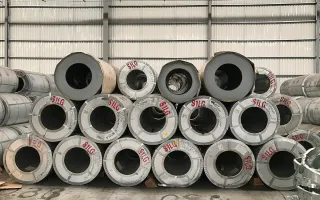
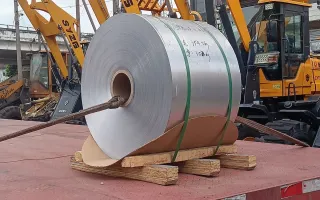
The Chapter 72 notes define flat-rolled products as rolled products of solid rectangular cross section, other than square, in the form of coils of successively superimposed layers or in straight lengths. That is the wording that places steel coil and slit coil in the flat-rolled headings, and it is also why wire, which the same notes define as a cold-formed product in coils, sits elsewhere.
Each flat-rolled heading then splits on width. The headings of non-alloy steel read “of a width of 600 mm (23.62 in) or more” or “of a width of less than 600 mm (23.62 in)”, and the notes add that a flat-rolled product of any other shape than rectangular is treated as 600 mm (23.62 in) or more. A coil exactly 600 mm (23.62 in) wide is therefore on the wide side of the line.
How do width, rolling and coating pick the heading?
Work through the questions in order, as the nomenclature does.
- Which steel? Non-alloy steel uses headings 7208 to 7212. Steel that meets the alloy definition in the Chapter 72 notes uses 7225 and 7226. The notes set element limits for this, and the mill analysis on the order decides.
- How wide is the coil? 600 mm (23.62 in) and over: 7208, 7209, 7210. Under 600 mm (23.62 in): 7211, 7212.
- Is it coated? Headings 7208, 7209 and 7211 are written for products not clad, plated or coated. Headings 7210 and 7212 are the coated and clad ones.
- Hot or cold rolled? For uncoated coil, hot rolled is 7208 and cold rolled is 7209. The two differ in process: hot rolling takes place above the recrystallization temperature and leaves mill scale, while cold rolling takes place below it and gives a smoother surface and tighter tolerances.
- Which coating? Inside heading 7210 the subheadings separate tin, lead, zinc, chromium oxides, aluminium, and painted or plastic-coated products.
Which subheading does each coil type match?
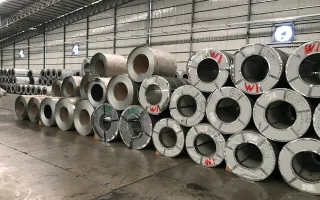
Hot rolled coil. Heading 7208 has subheadings for coils not further worked than hot rolled, split by whether they are pickled and then by thickness. The US schedule text lists pickled coil in 7208.25, 7208.26 and 7208.27, and other hot rolled coil in 7208.36 to 7208.39. Our pickled and oiled hot rolled coil is sold as strip that has had its scale removed; the guide on the two rolling routes explains the difference.
Cold rolled coil. Heading 7209 lists coils not further worked than cold rolled in 7209.15 to 7209.18, by thickness. Annealing and temper rolling are covered in cold rolled coil annealing and surface quality. The thickness bands matter for the subheading, so state the nominal thickness exactly.
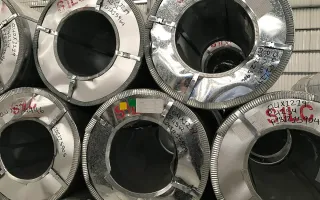
Galvanized coil. Heading 7210 separates electrolytically zinc-coated products (7210.30) from those otherwise plated or coated with zinc (7210.41 for corrugated and 7210.49 for other). Continuous hot-dip coating is not an electrolytic process, so the wording points to the second group, which is the line in the table. See galvanized vs Aluzinc coil for the two coating types.
Aluzinc coil. Aluminium-zinc coated flat-rolled steel has its own subheading in 7210, 7210.61, because the nomenclature names aluminium-zinc alloys. The Aluzinc, Galvalume and Zincalume guide explains why the same coating has three trade names.
Prepainted coil. Subheading 7210.70 covers painted, varnished or plastic-coated flat-rolled steel. The US schedule text divides it into goods not coated or plated with metal and other goods, with zinc-coated goods listed under the second, so a painted galvanized coil is described by the painted subheading. Paint systems are covered in prepainted coil paint systems and RAL colours. If a coil carries more than one coating, ask your broker which process the code follows.
How does slitting change the code?
Slit coil is cut from a wide coil to narrower strips, as described in slit coil vs full-width coil. Our slit widths start at 20 mm (0.787 in) [0.8 in], so a slit order can fall on either side of the 600 mm (23.62 in) line. A coil slit to 650 mm (25.59 in) stays in 7208, 7209 or 7210, while a coil slit to 500 mm (19.69 in) moves to 7211 or 7212. State the slit width in the enquiry, because it changes the heading.
How do you state the classification in an enquiry?
The code is declared by the importer, so the quotation gives the facts a broker needs rather than a code:
- steel type: non-alloy or alloy, and the grade, as discussed in steel coil grades explained
- standard, such as those in the steel coil standards guide
- hot rolled, cold rolled or coated, and the coating type
- nominal thickness and width, or slit width
- full-width or slit, and whether the coil is oiled or painted
Thickness is worth checking with the coil weight calculator when a broker asks for mass. Classification follows the General Rules of Interpretation, whose first rule says that goods are classified by the terms of the headings and the section or chapter notes, as US Customs and Border Protection explains.
What should you check before shipping?
Three checks save most problems. First, confirm the width on the order against the 600 mm (23.62 in) line, because a rounding difference or a slit change moves the heading. Second, confirm whether the steel is non-alloy or alloy, which the mill analysis shows. Third, confirm the coating wording on the commercial documents, so that galvanized, Aluzinc and painted coil are each described the way your broker expects. Where the answer is unclear, a binding ruling from the customs authority of your own market is the reliable route.
Who is responsible for the code?
The importer. US Customs and Border Protection states that the importer of record must use reasonable care to classify imported goods, and that importers may request binding rulings or use an expert. In the European Union the Combined Nomenclature adds eight-digit subdivisions to the Harmonized System, and other countries add their own. A code copied from another market’s shipment record can therefore be wrong for yours.
Reinwent is a trading and sourcing company that sources coil from manufacturers in Türkiye. Send the product, standard, thickness, width and destination through the quote request form, and the quotation arrives within 12 hours at the latest. For the full range, see the steel coil hub.
Related coil guides: import steel coil from Türkiye; steel coil importers guide; steel coil manufacturers in Türkiye; steel coil price factors.
Read next: steel coil FAQ, steel coil: Türkiye vs China, what is cold rolled steel, what is hot rolled steel, pickled and oiled steel.