 Steel
Key facts
- Cold rolling starts from hot rolled steel, which is normally pickled first to remove scale.
- It is done below the recrystallization temperature, so the steel strain-hardens: strength rises by up to 20%.
- The surface is better and the tolerances are tighter than on hot rolled steel.
- Cold rolled coil is supplied Full Hard (unannealed) or annealed and temper rolled for forming.
- The Reinwent range is 0.20 to 3.00 mm (0.008 to 0.118 in) thick and 600 to 1600 mm (23.6 to 63.0 in) wide, to EN 10130.
How is cold rolled steel made?
Hot rolled strip leaves the mill with an oxide scale. Pickling in acid removes it, and the clean strip goes to a cold rolling mill. Because the steel is below its recrystallization temperature, it keeps the strain of each pass. Full-hard rolling reduces the thickness by 50% according to the Wikipedia article on rolling, while the other cold rolling conditions involve less reduction.
Cold rolling cannot reduce the thickness as much in a single pass as hot rolling can, which is why the starting material is already a thinner hot rolled strip. After rolling the strip is normally annealed to restore ductility, and a very light skin pass of about 0.5% to 1% sets flatness and surface roughness. The detail is in the guide on cold rolled coil annealing and surface quality.
What are the properties of cold rolled steel?
| Property | Cold rolled steel | Why |
|---|---|---|
| Surface | Smooth, clean finish | No mill scale; roughness set by temper rolling |
| Tolerances | Tighter than hot rolled | Covered for cold rolled products by EN 10131 |
| Strength | Up to 20% higher after rolling | Strain hardening below the recrystallization temperature |
| Formability | Good once annealed; low as Full Hard | Annealing restores ductility |
| Corrosion | No protective layer of its own | Iron rusts in contact with water and oxygen |
Hot rolled steel, by comparison, usually has tolerances of 2 to 5% of the overall dimension and does not work-harden. The standard for cold rolled low carbon steel for cold forming is EN 10130, with grades DC01 to DC06 on our product page.
Cold rolled steel vs hot rolled steel
Both start as the same steel; the difference is the temperature of the final rolling. Hot rolled steel is rolled above the recrystallization temperature, so it has scale and wider tolerances. Cold rolled steel has the better surface and the tighter tolerances. For a full side-by-side table with thickness ranges and standards read hot rolled vs cold rolled coil.
What is cold rolled steel used for?
The uses listed on the product page are household appliances and furniture, automotive parts and components, radiators, ventilation and filter equipment, and parts that are painted or coated afterwards. The smooth surface and close gauge suit these parts. Cold rolled coil is also the usual base material for galvanized coil.
What is cold rolled coil?
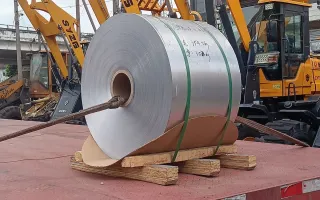
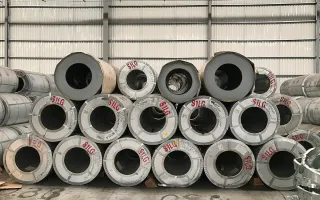
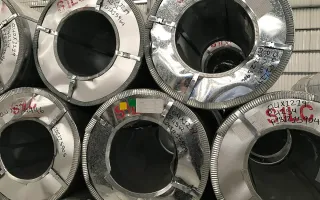
Cold rolled coil is cold rolled strip wound into a coil for shipping and processing. Reinwent sources cold rolled coil in Full Hard and annealed conditions, full-width or slit, from verified Turkish mills. The ranges are sourcing ranges and the exact limits are confirmed in the quotation. For the buying side see cold rolled steel coil from Türkiye.
Related guides
Next read galvanized coil surface finish and spangle for what happens after cold rolling, what is pickled and oiled steel for the usual starting material, and what is hot rolled steel for the step before it.
Send your thickness, width, grade, quantity and destination through request a quote and the quotation comes within 12 hours at the latest.