 Steel
Key facts
- Hot rolling leaves a discolored oxide layer, called scale, on the surface of the steel.
- Pickling dips the steel into a vat of pickle liquor to remove the scale. Hydrochloric acid is the primary acid in steelmaking.
- Pickled steel can rust in humid air, so a thin oil film is applied as a barrier to moisture. The oil generally has to be removed before plating or painting.
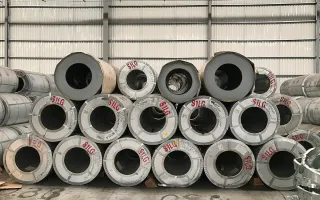
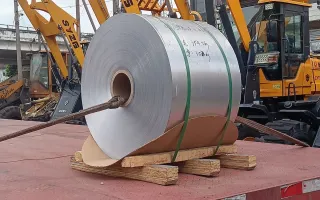
- Our pickled hot rolled coil is 0.80 to 5.00 mm (0.031 to 0.197 in) thick and 600 to 1600 mm (23.6 to 63.0 in) wide.
What is the pickling steel process?
Hot rolled strip leaves the mill coated in scale. In a pickling line the coil passes through acid, which dissolves the scale and leaves a clean metal surface. The bath is called pickle liquor, and Wikipedia describes it as a solution that usually contains acid. Hot rolled steel typically passes through a pickling line before cold rolling. The primary acid used in steelmaking is hydrochloric acid, although sulfuric acid was previously more common; hydrochloric acid pickles much faster while minimizing base metal loss.
Why is pickled steel oiled?
Once the scale is gone the steel is bare. Pickled sheet steel will oxidize (rust) when exposed to atmospheric conditions of moderately high humidity, so a thin film of oil or a similar waterproof coating is applied to create a barrier to moisture in the air. The oil is a thin film, not a coating of the kind applied to galvanized coil. This oil film must later be removed for many fabrication, plating or painting processes.
What does the oil protect, and what does it not?
The film acts as a barrier to moisture in the air on the bare, cleaned surface. It is the reason pickled coil does not need to be painted or coated straight away, and also the reason it has to be removed before plating or painting. If rust protection in service matters, a zinc coating works differently, as what is galvanized steel explains. For a coil that will wait for storage or transport, mention the conditions you expect in the request and the quotation confirms the oiling.
Pickled and oiled steel vs hot rolled and cold rolled
Pickled and oiled coil is a hot rolled product with a cleaned surface, and it sits between plain hot rolled and cold rolled coil.
| Feature | Hot rolled | Pickled and oiled | Cold rolled |
|---|---|---|---|
| Rolling | Above recrystallization temperature | Hot rolled, then pickled | Below it, usually from pickled coil |
| Surface | Oxide scale | Scale removed, oil film | Smoother, set by temper rolling |
| Tolerances | Usually 2 to 5% of the overall dimension | Hot rolled tolerances (EN 10051) | Tighter, EN 10131 |
The thickness ranges on our product pages are 0.80 to 5.00 mm (0.031 to 0.197 in) for pickled hot rolled coil and 0.20 to 3.00 mm (0.008 to 0.118 in) for cold rolled coil. The full comparison of rolling, tolerance and properties is in hot rolled vs cold rolled coil; the two ends of the table are explained in what is hot rolled steel and what is cold rolled steel.
How does pickled and oiled steel behave in forming?
The standards that cover pickled coil name cold forming in their titles. EN 10111 covers continuously hot rolled low carbon steel sheet and strip in coils for cold forming, and EN 10149-2 covers thermomechanically rolled high yield strength steels for cold forming. The clean surface is the reason the coil suits parts that are painted or coated after forming. Name the standard and the grade in the request. The finer surface and thin gauges of cold rolled steel come from a further rolling step, described in cold rolled coil annealing and surface quality.
What are pickled and oiled coils used for?
Pickled coil is the usual feedstock for cold rolling. Its clean surface suits parts that are painted or coated after forming, and buyers also use it for automotive and construction components and general fabrication.
Which standards and thicknesses apply?
Our pickled hot rolled coil follows EN 10111 (low carbon steel for cold forming, DD11 to DD14), EN 10025-2 (non-alloy structural steels such as S235JR, S275JR and S355JR) and EN 10149-2 (high yield strength steels for cold forming, from S315MC). EN 10051 sets the tolerances on dimensions and shape of continuously hot rolled uncoated plate, sheet and strip, and it covers strip intended for cold rolling. It is 0.80 to 5.00 mm (0.031 to 0.197 in) thick and 600 to 1600 mm (23.62 to 62.99 in) wide, full-width or slit, and coils weigh up to 30 tonnes. Which grades are available depends on the mill.
How do I specify pickled and oiled coil?
- The standard and the grade, for example EN 10111 DD11 or EN 10025-2 S235JR.
- Thickness and width in millimetres, and whether the coil is full-width or slit.
- Coil weight, up to 30 tonnes on our product page, and the coil inner diameter.
- Whether you need the oil film, or plan to remove it before plating or painting; the quotation confirms the condition the mill can supply.
- Quantity and destination.
The limits depend on the mill and the grade, and they are confirmed in the quotation. See the pickled hot rolled coil product page, and the pickled hot rolled coil from Türkiye page for sourcing.
Related guides: steel coil standards guide. To ask for pickled and oiled coil, request a quote and the quotation comes within 12 hours at the latest.