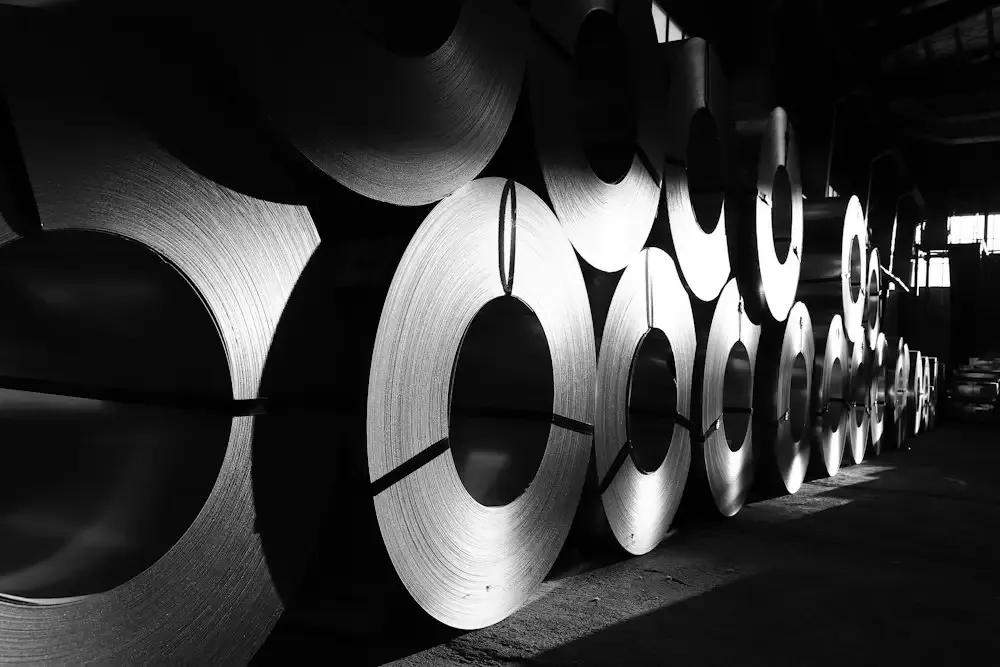
 Steel
Key facts
- Hot rolling takes place above the recrystallization temperature of the steel, cold rolling below it, usually at room temperature.
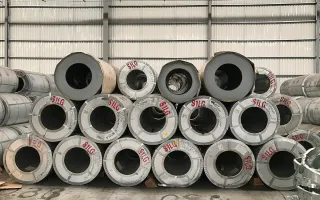
- Hot rolled strip leaves the mill with an oxide scale. Pickling removes it, and a film of oil protects the clean surface. This is the pickled and oiled coil we supply.
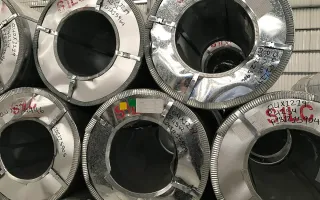
- Cold rolled strip is made from pickled hot rolled coil. It is thinner, smoother and held to tighter tolerances.
- Cold rolling hardens the steel. Annealing and a light temper rolling pass turn it into formable coil, while Full Hard coil is left unannealed.
- Our pickled hot rolled coil is 0.80 to 5.00 mm (0.031 to 0.197 in) thick, and our cold rolled coil is 0.20 to 3.00 mm (0.008 to 0.118 in) thick.
How do hot rolled and cold rolled coil differ?
Both start as the same steel. The difference is the temperature of the rolling and what is done to the strip afterwards. In hot rolling the steel stays above its recrystallization temperature, so it does not work-harden and can be reduced a great deal in one pass. Cold rolling takes place below that temperature. It cannot reduce the thickness as much per pass, but it improves the surface finish and holds tighter tolerances.
| Feature | Pickled and oiled hot rolled | Cold rolled |
|---|---|---|
| Rolling | Above the recrystallization temperature | Below it, from pickled hot rolled coil |
| Thickness we supply | 0.80 to 5.00 mm (0.031 to 0.197 in) | 0.20 to 3.00 mm (0.008 to 0.118 in) |
| Width we supply | 600 to 1600 mm (23.6 to 63.0 in) | 600 to 1600 mm (23.6 to 63.0 in) |
| Surface | Scale removed by acid, light oil film | Smoother; roughness set by temper rolling |
| Tolerances | Wider; EN 10051 covers hot rolled strip | Tighter; EN 10131 covers cold rolled products |
| Conditions | As rolled, pickled and oiled | Full Hard, or annealed and temper rolled |
| Standards we supply to | EN 10111, EN 10025-2, EN 10149-2 | EN 10130 |
| Typical use | Feedstock for cold rolling, fabrication, structural and automotive parts | Appliances, furniture, automotive parts, and the base for coated coil |
The thickness and width ranges are the sourcing ranges on our product pages. The exact limits depend on the mill and the grade, and they are confirmed in the quotation.
What does pickling do to hot rolled coil?
Hot rolling leaves oxide scale on the strip. In a pickling line the coil passes through acid, and hydrochloric acid is the main acid used in steelmaking. A thin film of oil is then applied, because pickled steel can rust in humid air, and the oil is a barrier against moisture. The film generally has to be removed before plating or painting.
A pickled surface is clean enough to be formed, painted or coated, and it is the normal preparation before cold rolling. Pickled hot rolled coil is therefore both a finished product and the feedstock for cold rolled coil.
What do cold rolling, annealing and temper rolling do?
Cold rolling reduces pickled hot rolled strip to a finished thickness. IspatGuru gives a typical reduction of 50% to 90% and a minimum thickness of 0.12 mm (0.005 in) for modern tandem mills. The rolling work-hardens the steel: strength rises, with up to 20% quoted in two references, and ductility falls.
Full Hard. Strip taken straight from the mill without annealing is strong and hard, and it is not meant for forming. Choose it when strength matters or when you will process the strip further.
Annealed. Annealing is a heat treatment that raises ductility and lowers hardness. It removes the dislocations and internal stresses that cold working built up, and new strain-free grains form.
Temper rolling (skin pass). After annealing a very light cold rolling pass follows. The references give a reduction of between 0.25% and 1%, so we say about 1% or less. It improves flatness and gauge consistency, sets the surface roughness and removes the yield point phenomenon, which helps in deep drawing.
Which standards apply?
- EN 10111 covers continuously hot rolled low carbon steel sheet and strip in coils for cold forming, with grades DD11 to DD14. Its scope is 1.0 to 11 mm (0.039 to 0.43 in). Our pickled coil range starts at 0.80 mm (0.031 in), so state the thickness and the standard together and the mill confirms them.
- EN 10025-2 covers hot rolled non-alloy structural steels, for example S235JR, S275JR and S355JR.
- EN 10149-2 covers weldable hot rolled high yield strength steels for cold forming in the thermomechanically rolled condition, in grades from S315MC.
- EN 10130 covers cold rolled uncoated low carbon steel for cold forming, in widths of 600 mm (23.6 in) and over, from 0.35 to 3 mm (0.014 to 0.118 in) unless agreed otherwise. Its grades run from DC01, and our range lists DC01 to DC06.
Tolerances sit in companion standards: EN 10051 for continuously hot rolled uncoated strip and EN 10131 for cold rolled products. Strength figures differ by grade and thickness, so read them from the grade table of the standard, not from a general rule.
When should you choose hot rolled and when cold rolled?
Choose pickled hot rolled coil when the part is thicker, when the use is structural or general fabrication, or when the coil will be painted or coated after forming.
Choose annealed cold rolled coil for thin parts that are formed, drawn or pressed and need a smooth, flat surface and close thickness control, such as appliance and furniture parts. Choose Full Hard cold rolled coil when strength matters more than forming.
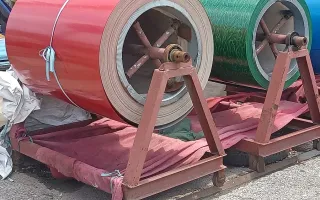
Coated coil is a further step. Cold rolled coil is the usual base for galvanized coil, and prepainted steel coil is painted galvanized strip. If you will have the coil cut to narrower widths, read slit coil vs full-width coil. To plan weights, use the steel coil weight calculator.
What should a quote request state?
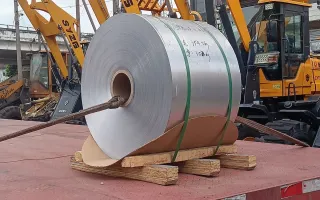
Give the product (pickled and oiled hot rolled, Full Hard or annealed cold rolled), thickness and width in millimetres, the grade or standard, full-width or slit, the coil inner diameter and maximum weight, the quantity and the destination. The coil inner diameter is 610 mm (24.0 in) for pickled coil and 508 to 610 mm (20.0 to 24.0 in) for cold rolled coil, and coils weigh up to 30 tonnes (about 66,000 lb). See the whole steel coil range, then request a quote. The quotation comes within 12 hours at the latest.
Related coil guides: galvanized or Aluzinc coating.
Read next: steel coil FAQ, steel coil: Türkiye vs China, what is cold rolled steel, what is hot rolled steel, steel coil standards, steel coil grades DX51D, DD11 and DC01, cold rolled coil annealing and surface quality, steel coil price factors.