
 Steel
Hot-dip galvanized wire
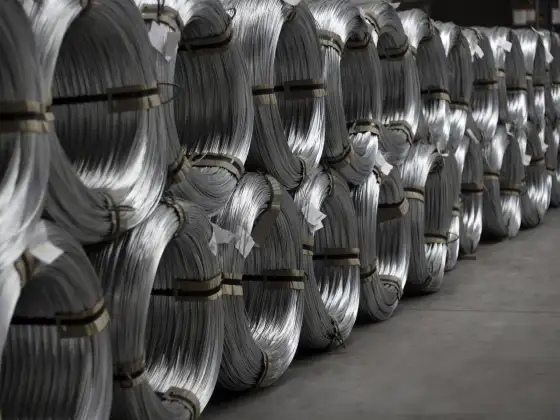
Galvanized steel wire is steel wire with a zinc coating, supplied in diameters from 0.8 to 8 mm with a coating weight of 50 to 300 g/m². Standards: EN 10244-2 and ASTM A641. Origin: Türkiye, other qualified mills on request.
Last updated
- Origin
- Türkiye, other qualified mills on request
Specifications
| Property | Value |
|---|---|
| Diameter | 0.80–8.00 mm |
| Zinc coating | 50–300 g/m² |
| Standards | EN 10244-2, ASTM A641 |
Uses
- Tying and binding in construction
- Agriculture
- Binding and bundling in industry
Galvanized steel wire: what it is
Galvanized steel wire is steel wire covered with a layer of zinc. The zinc shields the steel from air and moisture, and because zinc is more reactive than steel it also protects the wire where the coating is scratched or damaged. The galvanized wire offered here comes in diameters from 0.8 to 8 mm, with a zinc coating weight from 50 to 300 g/m², and follows EN 10244-2 and ASTM A641.
Coating weight explained
Coating weight is the mass of zinc per square metre of wire surface, stated in g/m². Resistance to corrosion depends on how thick the zinc layer is, so a heavier coating generally gives longer protection than a lighter one. EN 10244-2 applies to wire of round or other cross-sections.
Where galvanized wire is used
Buyers use galvanized wire where the wire has to hold up against weather or moisture: tying and binding in construction, agriculture, and binding and bundling in industry.
If you need a soft, uncoated wire for tying instead, see our black annealed wire. For wire that is cold reduced to a higher tensile strength, see cold drawn wire.
Questions buyers ask
What does coating weight in g/m² mean for galvanized wire?
Coating weight is the mass of zinc per square metre of surface. Zinc protection is directly related to coating thickness, so a higher figure generally means a thicker zinc layer. The range offered is 50 to 300 g/m².
What diameters of galvanized wire are available?
Diameters run from 0.8 mm to 8 mm.
Which standards apply to galvanized wire?
The standards given are EN 10244-2 and ASTM A641. EN 10244-2 specifies the requirements for coating mass, other properties and testing of zinc and zinc alloy coatings on steel wire.
Why is zinc used to coat steel wire?
Zinc acts as a barrier against air and moisture. It is also more reactive than steel, so it corrodes first at small scratches or damaged spots and keeps protecting the steel there.
What is galvanized wire good for?
Galvanized wire suits jobs where the wire meets weather or moisture. Buyers use it for tying and binding in construction, in agriculture, and for binding and bundling in industry. The zinc coating is what lets it hold up outdoors.
Can galvanized wire rust?
Yes, in the end it can. The zinc coating protects the steel and keeps protecting it where the coating is scratched or damaged, but zinc is used up over time, so a thicker coating (a higher g/m² figure) generally lasts longer. Galvanized steel can last many decades when it is maintained.
Is galvanized the same as steel?
Galvanized wire is steel wire with a zinc coating. The core is ordinary steel, and galvanizing is the process of applying the protective zinc layer to prevent rusting.
Which is better, galvanized or stainless steel wire?
It depends on the job. Stainless steel resists corrosion through its chromium content, 10.5% or more, which forms a thin self-repairing surface film. Galvanized wire gets its protection from a zinc coating and is generally used where corrosion resistance is needed without the cost of stainless steel.
Related products
 Black annealed wireBlack annealed wire, also sold as tie wire, binding wire or rebar tie wire, is soft heat-treated steel wire in diameters from 0.8 to 8 mm with a tensile strength of 300 to 450 N/mm². Standard: EN 10218-2. Origin: Türkiye, other qualified mills on request.
 Cold drawn wireCold drawn wire, also called drawn wire or bright wire, is steel wire pulled to size at room temperature, in diameters from 0.8 to 6 mm with a tensile strength of 500 to 1,000 N/mm². Standard: EN 10218-2. Origin: Türkiye, other qualified mills on request.