 Steel
Key facts
- Stainless steel needs at least 10.5% chromium; grade 304 contains 18% chromium.
- Its protection is a thin chromium oxide passive film that repairs itself when oxygen is present.
- Galvanized steel is protected by zinc: as a barrier while intact and as a sacrificial anode at scratches.
- Neither is immune: stainless steel can pit in chloride environments, and galvanizing is consumed over time.
How do galvanized and stainless steel compare?
| Feature | Galvanized steel | Stainless steel |
|---|---|---|
| What it is | Carbon steel with a zinc coating | Steel alloy with at least 10.5% chromium |
| Protection comes from | The coating on the surface | The alloy itself, via a passive film |
| Main protection mechanism | Barrier, plus sacrificial (cathodic) protection of zinc | Self-repairing chromium oxide film |
| At a scratch or cut edge | Zinc corrodes first and shields the steel | Film reforms when oxygen is present |
| Main weakness | Zinc is used up over time | Pitting and crevice corrosion, mostly from chlorides |
| Service life depends on | Coating thickness and the environment | The grade, and the chloride level of the environment |
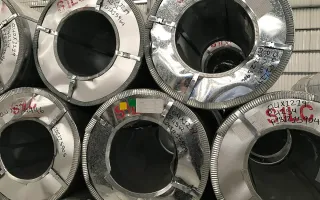
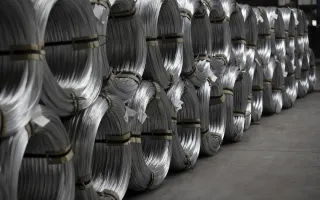
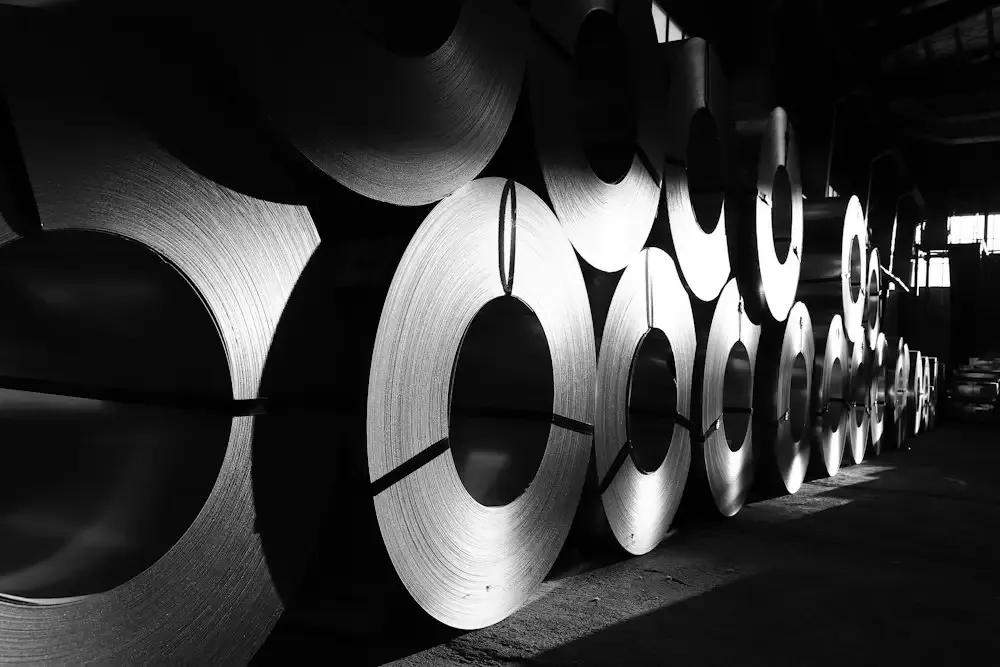
| Typical forms | Coil, strip, wire | Many grades and families |
Which rusts less, galvanized or stainless steel?
Stainless steel, in general. Its protection is in the metal throughout, so a scratch does not remove it. Galvanized steel protects well while zinc remains, and the American Galvanizers Association states that zinc thickness is proportional to service life. The galvanized coil class G90 carries 0.90 oz/ft² of zinc on both sides together and is normally used indoors or where exposure is mild.
Galvanized steel vs stainless steel corrosion
Stainless steel is not completely immune. Localized corrosion such as pitting and crevice corrosion occurs mostly where chloride ions are present, and higher chloride levels call for more highly alloyed grades. For galvanized steel outside salty environments, corrosion is mainly driven by the level of sulfur dioxide in the air. In both cases the environment decides the outcome, so name the exposure when you specify.
What is the difference between galvanized and stainless steel in structure?
Galvanizing is a process: zinc is applied to steel or iron, forming a bond with iron-zinc alloy layers, as explained in what is galvanized steel. Stainless steel is a material: the chromium is alloyed throughout. Austenitic grades are about two-thirds of production, ferritic grades have 10.5 to 27% chromium, and duplex grades 19 to 32%.
When should you choose which?
Match the material to the exposure. For galvanized steel, the zinc thickness is proportional to service life, and the class G90 is normally used indoors or where exposure is mild; roofing, ducts and appliances are typical uses of galvanized strip. For stainless steel the film repairs itself where oxygen is present, and where chlorides are present the grade is chosen with that in mind, because higher chloride levels call for more highly alloyed steels. The zinc grades are covered in zinc coating classes.
Related guides
Reinwent supplies galvanized coil and galvanized wire. See also galvanized vs Aluzinc coil.
Send your specification through request a quote and the quotation comes within 12 hours at the latest.