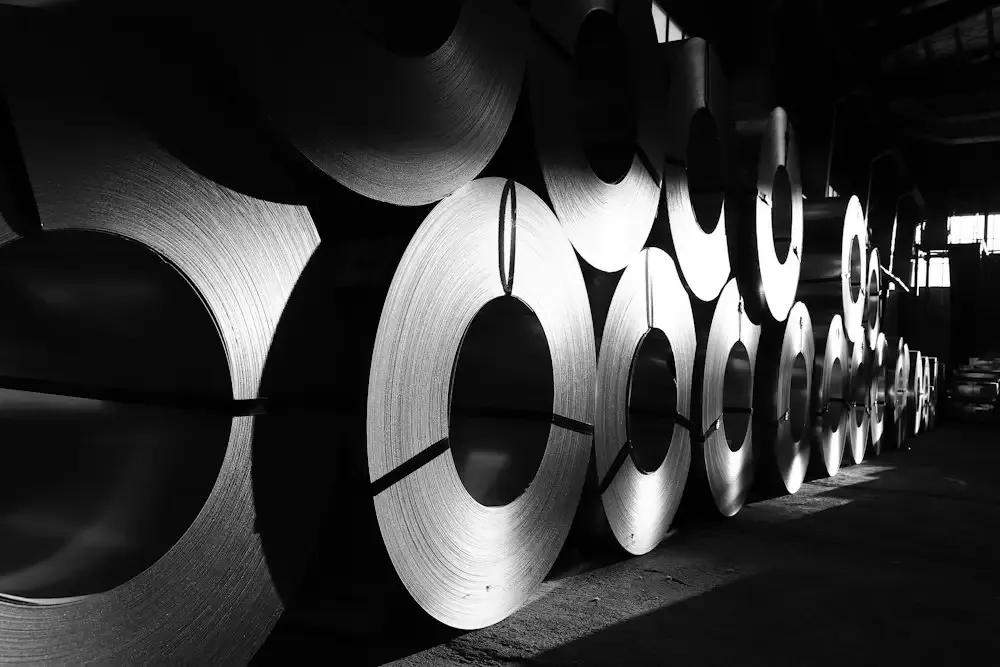
 Steel
Key facts
- Wholesale is the resale of goods to retailers, to business users or to other wholesalers rather than to end consumers.
- Wholesalers commonly sort goods in large lots, break bulk and resell in smaller lots.
- Retail is the resale of goods mainly to the general public for personal or household use.
- Incoterms rules divide tasks, costs and risks between seller and buyer.
- Reinwent is a trading and sourcing company, not a manufacturer.
What does a trading company in steel actually do?
In this guide, a steel trading company means a business that buys steel products from producers and sells them on to business buyers. Put simply, a trader stands between the producer and the buyer: it is an intermediary, a conduit for goods offered by a supplier to a customer, in the same family as wholesalers, resellers and brokers.
In steel, that means the trader finds producers that can make what the buyer specified, obtains their offers, settles terms and follows the goods until they arrive. It earns its living by buying and selling, not by rolling, drawing or coating steel. The value for a buyer lies in the work around the product: the search, the comparison and the follow-up.
How does it differ from a mill or a distributor?
The three roles are easy to blur, because a single company can combine them. The table shows the basic difference.
| Role | What it does | What a buyer gets |
|---|---|---|
| Mill or plant | Manufactures the product | Its own range and its own terms |
| Distributor or wholesaler | Buys in bulk, often holds stock, sells in smaller lots | Availability near the market |
| Trading company | Sources from producers to the buyer's order | Several offers, one contact, follow-up to delivery |
A steel mill is an industrial plant for the manufacture of steel; wire plants draw and coat that steel further. Wholesale is the resale of goods to retailers, to industrial, commercial or professional users, or to other wholesalers, rather than to end consumers; wholesalers commonly sort goods in large lots, break bulk and resell in smaller lots. Retail is the last link: the resale of goods mainly to the general public for personal or household use. A professional buyer of wire by the tonne will rarely deal with retail, but the distinction explains why prices and pack sizes differ so much along the chain.
When does buying through a trader make sense?
Going direct to a plant suits a buyer who already knows which plant fits, has the staff to compare offers and can follow production from a distance. A trader earns its place when one or more of those is missing. Typical cases:
- you buy several wire types and want one contact for all of them;
- you do not yet know which producers can meet your size, coating or strength;
- you want offers compared on one basis before you decide;
- you cannot follow production and shipment yourself.
The trade-off is plain: a trader earns a margin. Weigh it against the time and risk it takes off you, and test it by comparing a trader’s offer with a direct one on the same specification.
What should you ask a trading company before you buy?
Treat a trader as you would any new supplier: check how it works before the first order. These questions cover the points that matter most:
- Are you a manufacturer or a trading company? The answer should be direct.
- How do you build the offer? Ask whether it collects several offers and how it puts them on a common basis.
- Will the offer name the standard? For wire, that means one standard per product, a tolerance on diameter, and the coating or tensile figures.
- Can I approve a sample first? Production should start against an approved sample and agreed figures.
- Which delivery term applies? FOB, CFR and CIF are Incoterms rules, published by the International Chamber of Commerce, that divide tasks, costs and risks between seller and buyer. Our quote form lists all eleven Incoterms rules; name one and the port.
- Who is my contact, and how fast do you reply? A clear answer here tells you how the order will be run.
Our guide to choosing a wire manufacturer sets out the product checks in detail, product by product.
What are the risks, and how do you manage them?
Most risks with any intermediary come from gaps between what was asked and what was offered.
Vague offers. A quote request works when every bidder prices the same detailed item; the more detail in the specification, the fewer assumptions each offer rests on. Send a complete specification and reject offers that leave fields open.
Hidden differences. Two offers can look close and differ in coating mass, packing or delivery term. Compare field by field before totals, as procurement practice does when it weighs quality, quantity, time and location together.
Unclear responsibility. Agree in writing who confirms the sample, who follows production and which Incoterms rule sets the transfer of risk.
Matters outside the specification. Customs clearance and duties depend on the destination country and the goods. Confirm them with your customs broker; they are not part of a wire offer.
How Reinwent works as a trading company
Reinwent is a trading and sourcing company, not a manufacturer. For every order we collect prices from many suppliers and put the offers on one basis, so you compare like with like; we do not name the suppliers. Some products are available from stock. You receive a quotation within 12 hours, and we keep in continuous contact while we manage the process from start to finish, as set out on our how we work page.
We focus on steel wire. The steel wire hub lists the four types we quote: hot-dip galvanized wire, black annealed wire, cold drawn wire and high carbon spring wire. If you are buying from Türkiye, our import guide covers the order fields. For the UAE or Nigeria, see binding wire for UAE importers and binding wire for Nigeria. When you are ready, request a quote.