 Steel
Key facts
- Galvanizing is the process of applying a protective zinc coating to steel or iron to prevent rusting.
- Zinc protects steel as a barrier against the atmosphere and as a sacrificial anode that corrodes first at gaps in the coating.
- Hot-dip galvanizing submerges the steel in molten zinc, and electrogalvanizing gives a thinner coating.
- The service life of a zinc coating is a linear function of its thickness.
- ASTM A641 covers zinc-coated carbon steel wire in coils in soft, medium and hard temper, and EN 10244-2 covers the coating mass and its testing.
The short definition
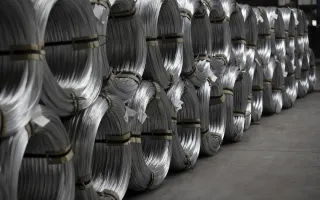
Galvanized wire is steel wire with a zinc coating. The steel core is drawn to the diameter you need, and the zinc is added afterwards for one purpose: to keep the steel from rusting. Reference works define galvanization as the process of applying a protective zinc coating to steel or iron, to prevent rusting, and wire is simply one of the shapes that gets this treatment.
Think of it as two materials working together. Hot-dip galvanized products are described as suited to jobs that need the strength of steel combined with the corrosion resistance of zinc. The steel carries the load and bends when you bend it. The zinc stands guard on the outside. If you are new to the subject, that division of labour is the whole idea. For where galvanized wire sits among all the kinds, see types of steel wire.
How zinc protects the steel
Zinc protects in two ways, and both are named by the galvanizing industry and by general references.
- Barrier protection. The coating sits between the steel and the atmosphere. While it is unbroken, air and moisture cannot reach the metal underneath.
- Sacrificial protection. Zinc is anodic to steel, so it corrodes in preference to the steel at scratches, cut edges and small defects in the coating. The zinc acts as a sacrificial anode, which is a form of cathodic protection.
The second effect explains a common worry: a cut end of galvanized wire does not simply begin to rust from the cut. It also explains why the coating is a limited resource. The zinc that protects is the zinc that is used up. The American Galvanizers Association states that the service life of zinc coatings is a linear function of coating thickness, so more zinc means a longer life in the same setting. Where that zinc is measured in g/m², our guide to zinc coating classes shows how the standards write it.
Hot-dip and electro-galvanized wire in one comparison
Two processes put zinc on wire. They are not rivals in every order, but they give different coatings.
| Feature | Hot-dip galvanized | Electro-galvanized |
|---|---|---|
| How zinc is applied | Steel is submerged in molten zinc | Electric current bonds a layer of zinc |
| Coating thickness | Thicker | Thinner |
| Coating make-up | A series of iron-zinc alloys | A bonded layer of zinc |
| Finish | Usually dull grey | Brighter |
A thinner coating is not a fault. It is a different product for a different exposure, and the electro-galvanized reference describes lower thickness deposits chosen to reach comparable performance in some uses. For the full comparison of finish and coating weight, read our guide to hot-dip vs electro-galvanized wire. The steps of the hot-dip route are in our guide to the hot-dip galvanizing process for wire. The wire Reinwent sources is hot-dip galvanized.
What the coating mass and the temper mean
Two numbers decide most of what a buyer gets, and both are easy to read once you know what they refer to.
- Coating mass is the zinc on the surface, in g/m². EN 10244-2 specifies the requirements for coating mass, other properties and testing of zinc and zinc alloy coatings on steel wire. More zinc, longer protection.
- Temper is the strength level of the steel. ASTM A641 covers zinc-coated carbon steel wire in coils in soft, medium and hard temper. Soft wire is easier to bend and tie, and hard wire is stiffer.
The coating protects and the temper sets how the wire behaves in the hand and under load, so the two are asked for separately. Our guide to galvanized wire tensile strength reads the temper bands, and the zinc coating classes guide covers the coating side.
Why it is also called GI wire
You will often see the same product sold as GI wire. GI stands for galvanized iron, an older label that survives in the trade, even though the metal under the zinc is steel. Our explainer on what GI wire is covers that trade name, and galvanized iron vs galvanized steel explains why the word iron lingers. For ordering, the label does not matter: diameter, coating mass, temper and standard do.
Where galvanized wire is used
Galvanized wire is chosen where a bare steel wire would rust too fast for the job. The uses on the Reinwent product page are:
- tying and binding in construction;
- agriculture;
- binding and bundling in industry.
Reference works on wire also describe it as the raw material for other wire products. Reinwent supplies the wire, not finished fence or mesh. For a fuller list of jobs, see our guide to galvanized wire uses.
What to specify when buying
A request for galvanized wire is complete when it names these fields:
- Diameter in millimetres. If a drawing gives a gauge number, convert it first.
- Coating: a class in your standard, or the mass in g/m².
- Process: hot-dip or electro-galvanized.
- Temper or tensile band.
- Standard: EN 10244-2, ASTM A641, or the one your market uses.
- Quantity, coil form and destination.
Each choice has a short explanation in our overview of types of galvanized wire. For shipping paperwork, our guide to steel wire HS codes explains how the classification works, and your customs broker confirms the final code.
Galvanized wire from Türkiye
Türkiye is a producer and exporter of galvanized wire, and Reinwent buys it from manufacturers in Türkiye. Reinwent is a trading and sourcing company and does not make wire. Buyers used to Chinese wire can read galvanized wire: Türkiye vs China. For each order we gather several offers and line them up on one basis, so you compare like with like.
Reinwent supplies hot-dip galvanized wire in diameters from 0.8 to 8 mm, with a coating weight of 50 to 300 g/m², to EN 10244-2 and ASTM A641. The page on galvanized wire from Türkiye explains how ordering works from specification to shipping.
A quotation reaches you within 12 hours, and we stay in touch through the whole process. When your specification is ready, request a quote.