 Steel
Key facts
- Hot-dip galvanizing leaves a thick layer of zinc-iron alloys, while electrogalvanizing applies a thinner zinc coating.
- EN 10244-2 and ASTM A641 each define their own zinc coating classes, and the classes of one are not converted into the other.
- ASTM A641 sorts galvanized wire by temper into soft, medium and hard.
- A higher gauge number means a thinner wire, and gauge systems give different diameters for the same number.
- Black annealed wire is softened by annealing and has no zinc coating.
Why marketplace lists of wire types confuse buyers
Search for kinds of galvanized wire and you mostly find marketplace category pages. They mix trade names, end uses and specifications in one list, and the figures in them often disagree. That is not a useful way to buy. A wire is not defined by its listing title but by a handful of choices that appear in the order and in the standard behind it.
This guide sorts galvanized wire along those choices, and the table further down puts them side by side.
Type by coating process: hot-dip or electro-galvanized
The first split is how the zinc reaches the steel. In hot-dip galvanizing the wire passes through molten zinc, and the result is a thick layer of zinc-iron alloys bonded to the steel. Electrogalvanizing plates zinc onto the steel with an electric current and gives a thinner coating. The line steps are in how wire is hot-dip galvanized. Zinc life grows with thickness, so the process matters most outdoors.
We do not repeat the full comparison here. Our guide to hot-dip vs electro-galvanized wire covers structure, finish and protection in detail.
Type by coating mass: EN 10244-2 and ASTM A641 classes
The second split is how much zinc the wire must carry, stated in g/m² of wire surface. Two standards set it, and they are separate systems.
EN 10244-2 sets the coating mass, other properties and testing for zinc and zinc alloy coatings on steel wire. It uses the classes A, AB, B, C and D. ASTM A641 covers zinc-coated carbon steel wire and requires a minimum zinc mass for the class the buyer specifies. Its classes are numbered and lettered differently, and it also allows a “regular coating” with no minimum mass.
The same letter does not mean the same coating in both standards, so a class is only meaningful next to the name of its standard and the wire diameter. Our page on zinc coating classes shows the tables of each standard on its own, without converting between them.
Type by temper: soft, medium or hard
The third split is the condition of the steel itself. ASTM A641 classifies galvanized wire by temper, which it relates to tensile strength and stiffness, and it names three tempers: soft, medium and hard. The temper is one of the items the standard lists for an order, next to quantity, coated diameter and coating class.
The standard’s tables set the tensile requirements for each temper, so the temper name is enough to fix them once the standard is named. If you buy tie wire, our guide to what tie wire is lists the order fields for that use.
Type by diameter and gauge
The fourth split is size. Wire is ordered by its coated diameter in millimetres or inches, but many markets still quote a gauge number. A gauge number is not a diameter. In the gauge systems used for steel wire, a higher number means a thinner wire, and different systems give different diameters for the same number. The Standard wire gauge, for example, is a separate system from the American wire gauge.
Convert any gauge into millimetres with our wire gauge chart before you send a request, and state the diameter, not only the gauge.
Zinc alloy coatings
EN 10244-2 is written for zinc and zinc alloy coatings on steel wire, and it covers wire of round and other cross-sections. So a zinc alloy coating is not outside the galvanized family: it is ordered under the same standard. We do not list branded alloy coatings here, because we could not confirm them from two neutral sources. If your project calls for an alloy coating, describe it in the request and ask how each offer specifies it.
Type by form: coils
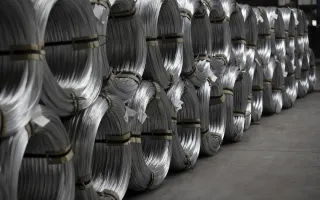
ASTM A641 covers galvanized wire supplied in coils, and the sample ordering description in the standard includes the coil size and the carrier. Coil weight, carrier and packing are therefore part of the order, not an afterthought. How coils are stowed and secured for export is explained in our guide to container loading of wire coils.
The contrasting type: black annealed wire
Black annealed wire is often listed next to galvanized wire, but it is a different product. Annealing is a softening heat treatment that increases ductility and reduces hardness, and black annealed wire is sold without a zinc coating. It bends easily but has no zinc to protect it outdoors. If you are choosing between the two, weigh the exposure of the job first.
Comparison table
| Type | What differs | What to state in an order |
|---|---|---|
| Coating process | Hot-dip gives a thick zinc-iron alloy layer; electro-galvanizing gives a thinner plated layer | Hot-dip or electro-galvanized |
| Coating class | Minimum zinc mass in g/m², set by class and diameter in each standard | Standard and class, or the coating mass in g/m² |
| Temper | Soft, medium or hard, related to tensile strength and stiffness | The temper name and the standard |
| Diameter | Coated wire size; gauge numbers differ between systems | Diameter in mm or inch, not a gauge number alone |
| Zinc alloy coating | Alloy instead of pure zinc, within the EN 10244-2 scope | A description of the coating you need |
| Form | Coil size and carrier | Coil weight and packing |
| Black annealed (contrast) | Softened by annealing, no zinc | Order it as a separate product |
The table is a checklist. A complete request names one option in every row that applies, plus the quantity and the destination.
Which galvanized wire does Reinwent supply?
Reinwent supplies hot-dip galvanized wire in diameters from 0.8 to 8 mm, with a coating weight of 50 to 300 g/m², to EN 10244-2 and ASTM A641. If the wire reaches you under the trade name GI wire, our explainer on what GI wire is shows it is the same zinc-coated steel wire; galvanized iron vs galvanized steel explains why the name says iron, and galvanized wire tensile strength covers the temper bands. If you are new to the product, start with what galvanized wire is.
Reinwent is a trading and sourcing company, not a manufacturer. We gather offers from many suppliers for every order and set them side by side on one basis. Some products are available from stock. A quotation reaches you within 12 hours, and from there we keep you informed and handle the whole process through to delivery.
For the other fields of an import order, read our galvanized wire guide for importers. To see how sourcing works from the specification to shipping, visit galvanized wire from Türkiye. When your specification is ready, request a quote.