 Steel
Key facts
- The Harmonized System identifies goods with six-digit codes and is the basis of the customs tariffs of more than 200 countries and economies.
- Heading 7217 covers wire of iron or non-alloy steel, and its subheadings separate uncoated, zinc-coated, other-metal-coated and other wire.
- Wire of other alloy steel belongs to heading 7229, and wire of stainless steel to heading 7223.
- Each country may add its own digits after the six-digit level, so national tariff lines differ between markets.
- The importer declares the classification, and customs authorities offer binding rulings for buyers who want certainty.
What is an HS code?
An HS code is the number customs uses to identify a product. It comes from the Harmonized Commodity Description and Coding System, a nomenclature developed and maintained by the World Customs Organization (WCO). The WCO describes it as more than 5,000 commodity groups, each identified by a six-digit code and arranged in a legal and logical structure. More than 200 countries and economies use it as the basis for their customs tariffs and their trade statistics, and the European Commission gives the same picture of the system.
How are HS codes structured?
The nomenclature is built in layers. US Customs and Border Protection (CBP) explains the layout in its classification guide: chapters grouped into sections, four-digit headings inside each chapter, and six-digit subheadings where a heading is split further. The first two digits of a heading give its chapter.
- Chapter (two digits). Chapter 72 is iron and steel. Chapter 73 is articles of iron or steel.
- Heading (four digits). Heading 7217 is wire of iron or non-alloy steel.
- Subheading (six digits). Subheading 7217.20 is that wire when plated or coated with zinc.
CBP notes that section and chapter titles have no legal weight. Both the WCO text and the US schedule print the same notes for Chapter 72, and they define wire as cold-formed products in coils with a uniform solid cross-section along the whole length that do not meet the definition of flat-rolled products.
Where does steel wire sit in the nomenclature?
Plain steel wire is found in Chapter 72. The headings below are taken from the WCO nomenclature and match the headings printed in the US Harmonized Tariff Schedule.
| Code | Wording in the nomenclature |
|---|---|
| 7213 | Bars and rods, hot-rolled, in irregularly wound coils, of iron or non-alloy steel (wire rod) |
| 7217 | Wire of iron or non-alloy steel |
| 7217.10 | Not plated or coated, whether or not polished |
| 7217.20 | Plated or coated with zinc |
| 7217.30 | Plated or coated with other base metals |
| 7217.90 | Other |
| 7223 | Wire of stainless steel |
| 7229 | Wire of other alloy steel |
Drawing pulls hot-rolled wire rod through one or more dies to cut its cross-section, so the drawn product is cold-formed: that is the line between heading 7213 and heading 7217, as wire rod vs wire explains.
Chapter 73 starts where the wire becomes an article. Heading 7312, for example, covers stranded wire, ropes and cables of iron or steel that are not electrically insulated. Netting and cloth woven from steel wire also have their own heading there. Wire sold in coils as wire stays in Chapter 72.
How do you classify each type of wire?
The split inside heading 7217 is about the surface. The questions to answer are: is the steel non-alloy, and is the wire coated, and with what?
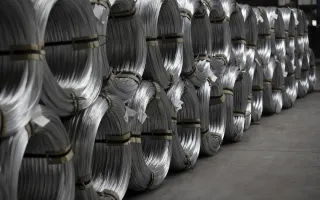
Galvanized wire. Galvanizing applies a protective zinc coating to steel; the zinc acts as a barrier and, being anodic to steel, keeps protecting it where the coating is damaged. A galvanized wire of non-alloy steel therefore matches the wording of 7217.20, plated or coated with zinc. Buyers in India often call it GI wire, and our guide on what GI wire is explains the term.
Black annealed wire. Annealing is a heat treatment that softens steel and increases its ductility. It does not add a coating, and black annealed wire carries no zinc. On its face that points to the uncoated subheading, 7217.10. We cite no ruling for it here, so treat the line as one to confirm with your broker rather than one to copy. The same product is sold as binding wire, which our binding wire guide for importers covers.
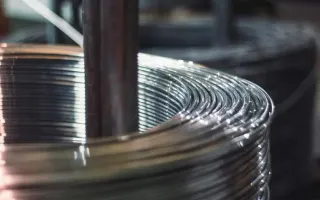
Cold drawn (bright) wire. Cold drawn wire is drawn through dies without a zinc layer. A plain, uncoated bright wire matches the wording not plated or coated, whether or not polished.
Spring wire. For spring steel wire the first question is the steel, not the surface. The Chapter 72 notes set minimum contents of elements such as chromium, manganese and silicon above which steel counts as other alloy steel. Spring wire of non-alloy high carbon steel stays in heading 7217. Wire that crosses those thresholds goes to heading 7229. The chemical analysis of the actual heat decides, so ask for it before you classify.
Why do national codes differ between countries?
The six-digit code is shared. Everything after it is national. CBP’s guide states that each party may add more detailed subdivisions for tariff, quota or statistical purposes, as long as they are coded beyond the six-digit level, and that this level is usually eight digits. The European Commission says the EU’s Combined Nomenclature adds eight-digit subdivisions and legal notes of its own.
You can see this in the US schedule: under 7217.10 it lists separate lines by diameter and other features that do not exist in the WCO text. So a code copied from a shipment database for one market can be wrong for another. Always read the tariff of the country where the wire is cleared.
Who is responsible for the classification?
The importer. CBP states that the importer of record must use reasonable care to classify imported goods, and that customs then fixes the final classification. It also notes that importers may request binding rulings or use an expert in customs law to help them. In the European Union the matching tool is the Binding Tariff Information decision, which the European Commission describes in its quick guide.
In practice your customs broker classifies the wire from the description and the standard on the commercial documents. Where the answer is unclear, a binding ruling in your own market is the reliable route. Our guides on importing steel wire from Türkiye and for galvanized wire importers cover the rest of the buying process.
How Reinwent helps
Reinwent is a trading and sourcing company, not a manufacturer. Every quotation states the product description and the standard, for example galvanized wire to EN 10244-2 or black annealed wire to EN 10218-2, so your broker has what they need to confirm the code. The code itself is confirmed by you and your broker.
You receive the quotation within 12 hours. Some products are available from stock, and we stay in contact with you and manage the order from start to finish. See how we work for the steps, or request a quote with your diameter, finish and destination.